Global businesses have been building their finance stack the hard way for years — a banking portal here, a treasury tool there, a crypto wallet somewhere else, spreadsheets holding it all together. Every rail has its own interface. Every workflow has its own rules. Every audit lives in a different system.
Reah was built to unify it. One operating system for fiat banking, stablecoin treasury, and AI-native execution. One ledger. One policy layer. One view.
In the past 6 weeks, Reah has crossed $23M in total deposits.
Here's what's behind it:
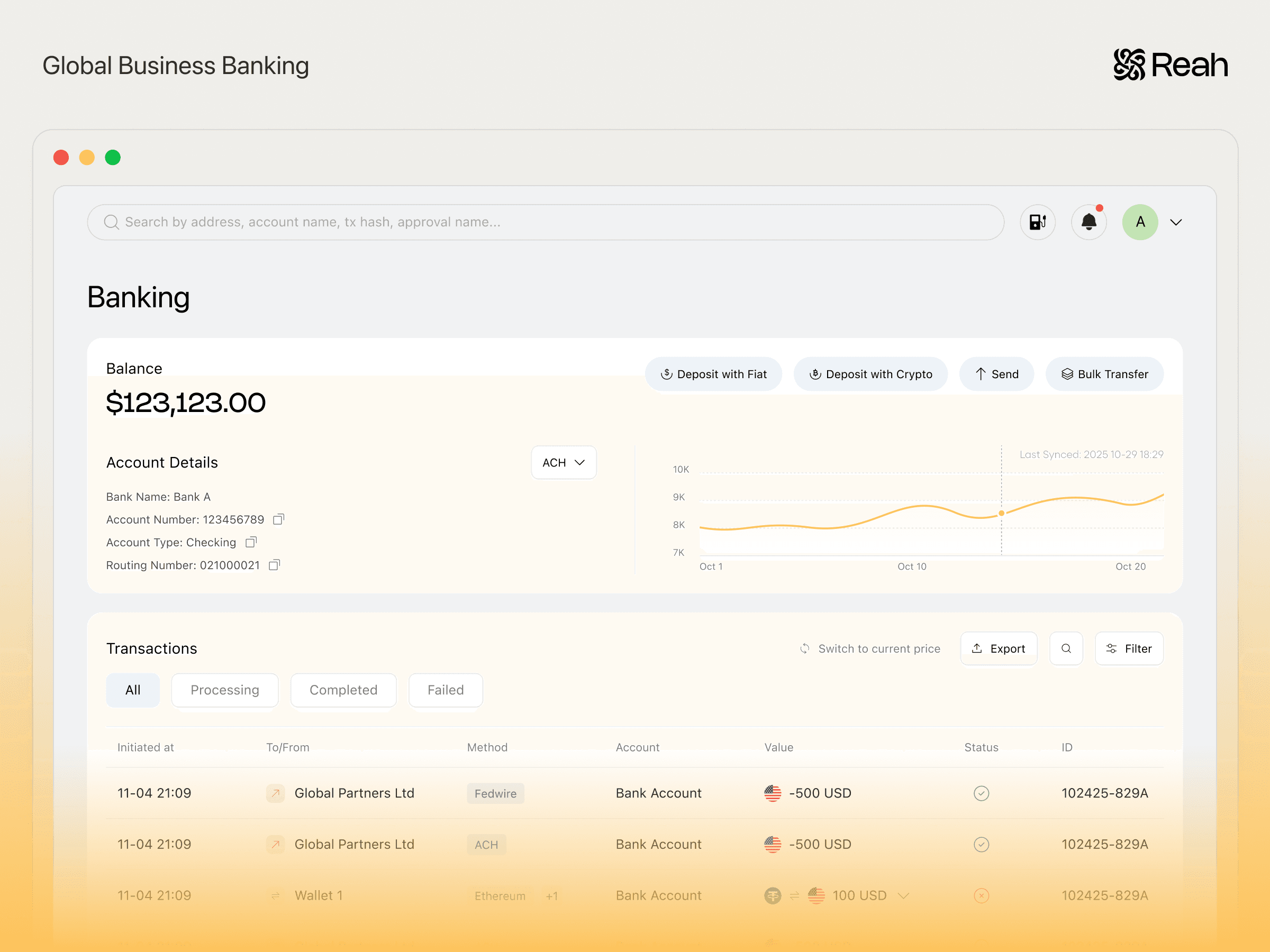
Global Business Banking
Reah Global Business Banking offers named USD accounts for businesses in 150+ countries, with ACH, wire, and SWIFT access in a single account, without the separate portals, correspondent banking delays, or provider juggling that global teams have learned to live with.
What makes it different from a traditional business bank account is what it connects to. Your USD account lives inside the same system as your treasury, cards, wallets, and approvals, so you can convert between fiat and stablecoins seamlessly, powered by USDG, Paxos's regulated USD-backed stablecoin, with every movement tracked and audit-ready.
Whether you're a crypto-native company running stablecoin and fiat treasury side by side, or a global business that's been navigating the friction of international banking for years — this is the account that was missing.
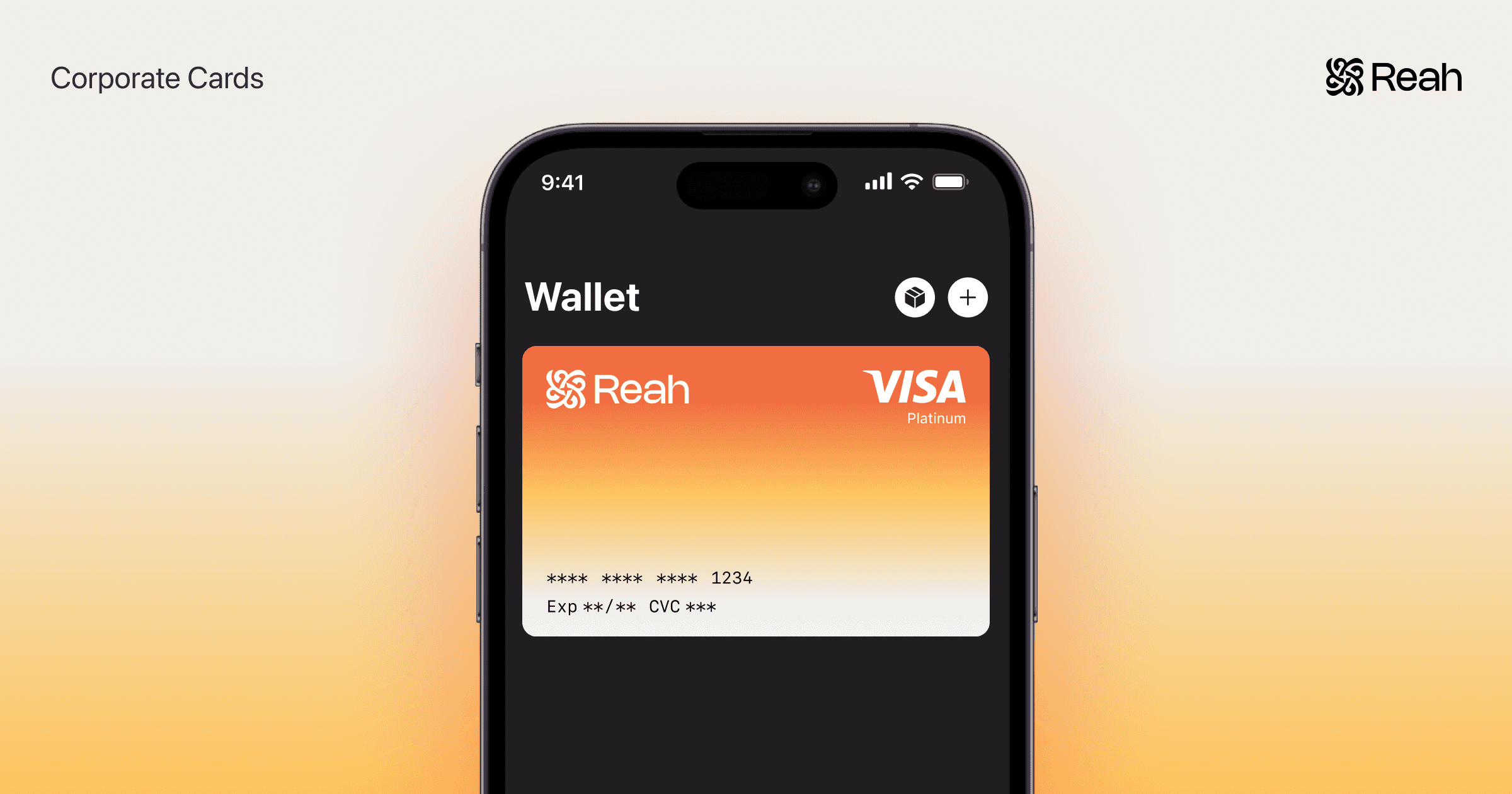
Corporate Cards
Global businesses run their finance operations across multiple rails: fiat, stablecoins, multiple currencies, multiple entities. They need real controls enforced across all of it before capital moves.
Most corporate card programs solve for one of those things. Reah's solves for all of them.
Reah Corporate Cards are virtual cards on the Visa network, available to businesses incorporated in 52 countries. They can be funded from fiat or crypto, with real-time spend controls including limits, category restrictions, and freeze and unfreeze, applied without filing a request or waiting on a bank. Receipts and categorization flow in automatically, so month-end isn't a reconciliation sprint.
The bigger difference is what sits underneath. Card activity lives alongside your wallet and banking operations, not siloed in a separate portal your finance team has to manually reconcile against everything else. No extra step to see where the money went.
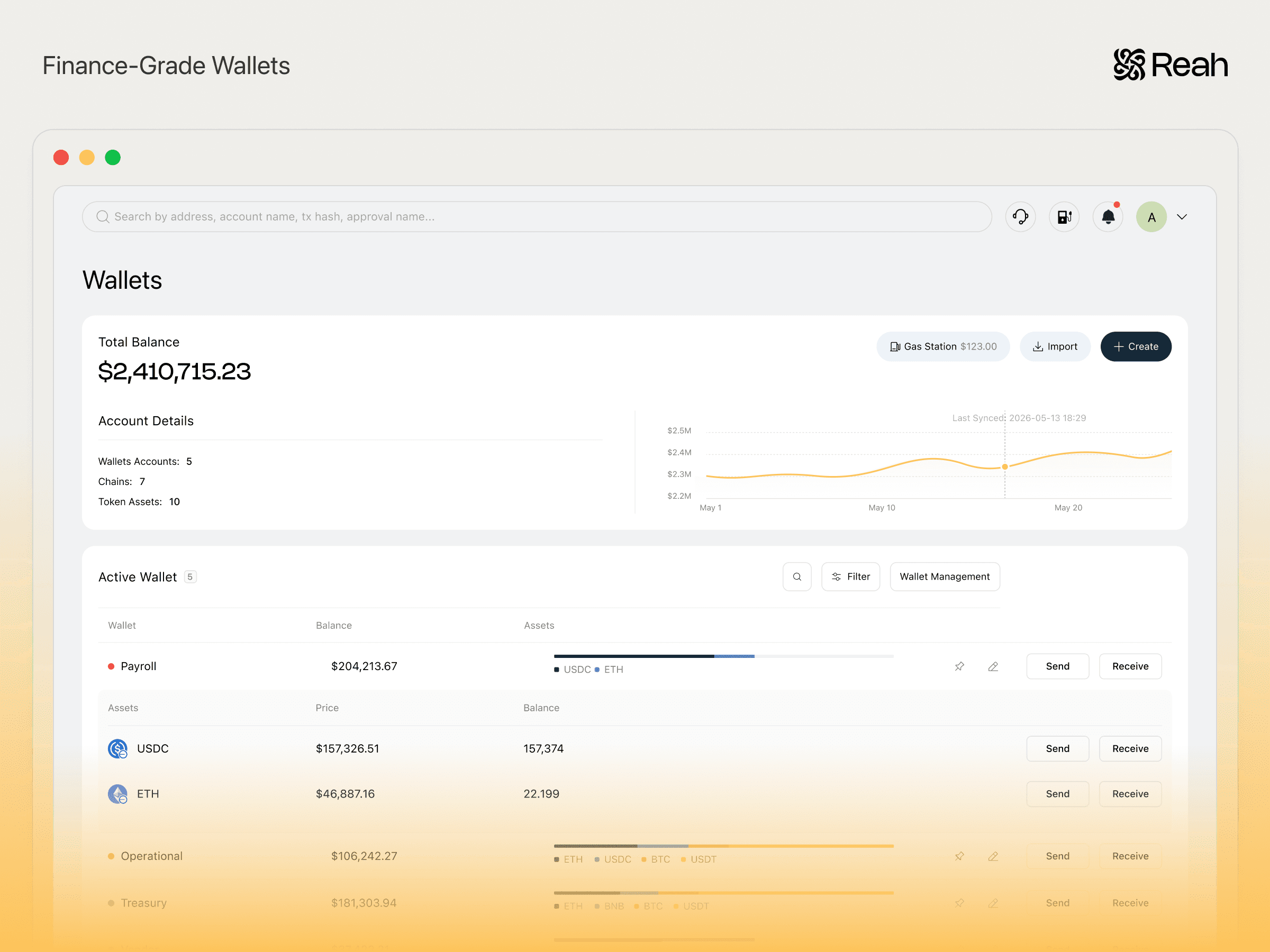
Finance-Grade Wallets
The default crypto wallet wasn't built for finance teams. It was built for traders and developers — and it shows.
Most wallets can't distinguish between an analyst initiating a payment and a CFO approving one, and the audit trail stops at a transaction hash.
Reah's wallet starts from a different question: what would a CFO actually need before trusting this with real operations? Every action goes through programmable approval policies before money moves, with role-based access and multi-sig thresholds configured from day one. Every transaction writes a full audit record your finance team can read, and flows directly into the same view as your off-chain operations.
Built for CFOs and finance operators who need to trust it with real operations, not as an afterthought but as the starting assumption. That's finance-grade.
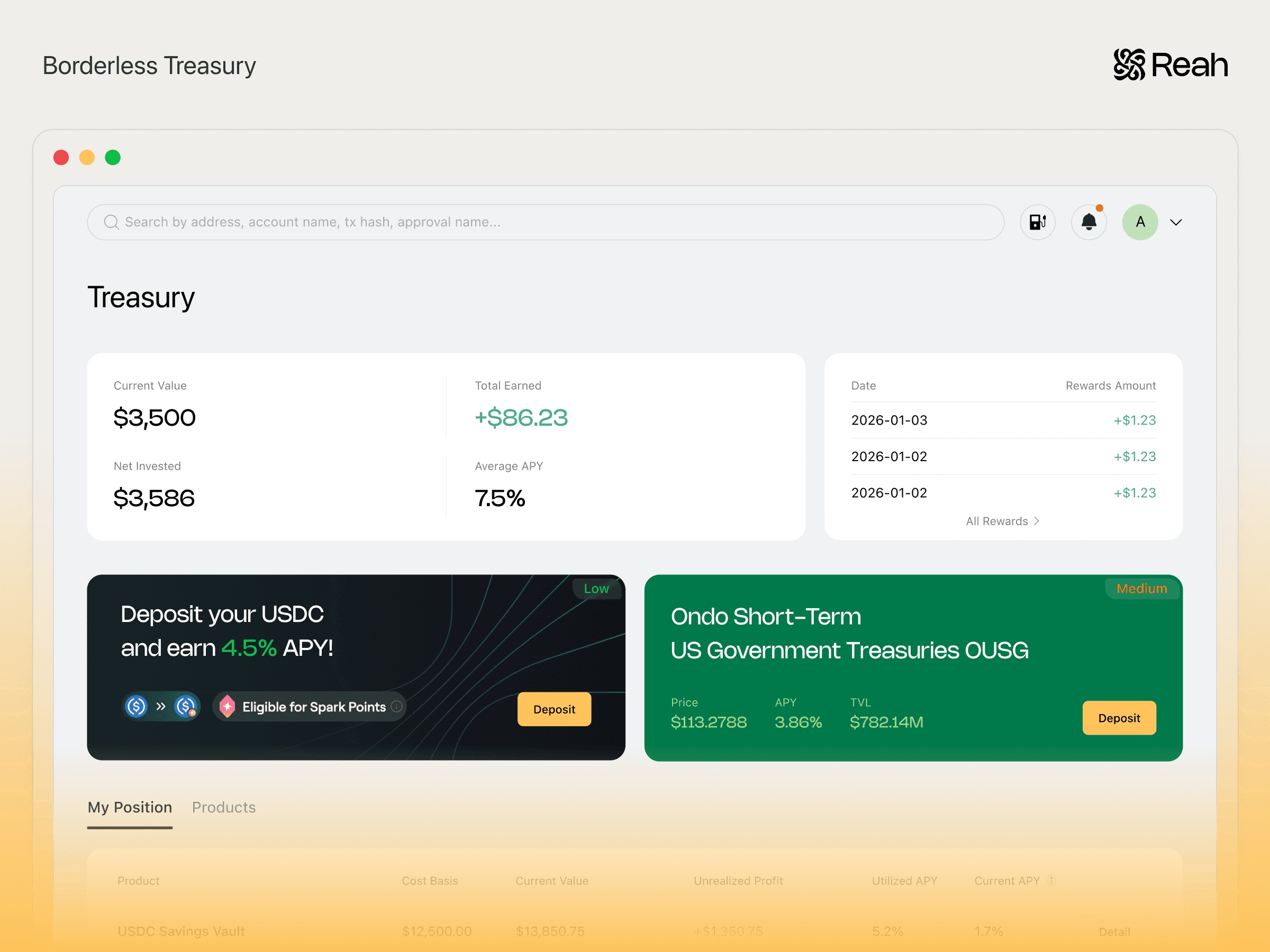
Borderless Treasury
With banking and spend covered, the question became: what happens to idle capital?
For most global finance teams, the answer has been unsatisfying: local bank rates, or DeFi vaults that are powerful but disconnected from treasury workflows. Access to better yields has historically meant more tools, more friction, and more reconciliation.
Borderless Treasury removes those constraints.
We built it around a curated set of vault partners, including Morpho, Gauntlet, Spark, Paxos Labs, Plume, and Ondo Finance, so finance teams can put idle stablecoins and tokenized real-world assets to work without building the infrastructure themselves. Yields reach up to ~10% APY, across multiple risk profiles, available around the clock with no geographic restrictions or banking-hours dependencies.
The Policy Engine
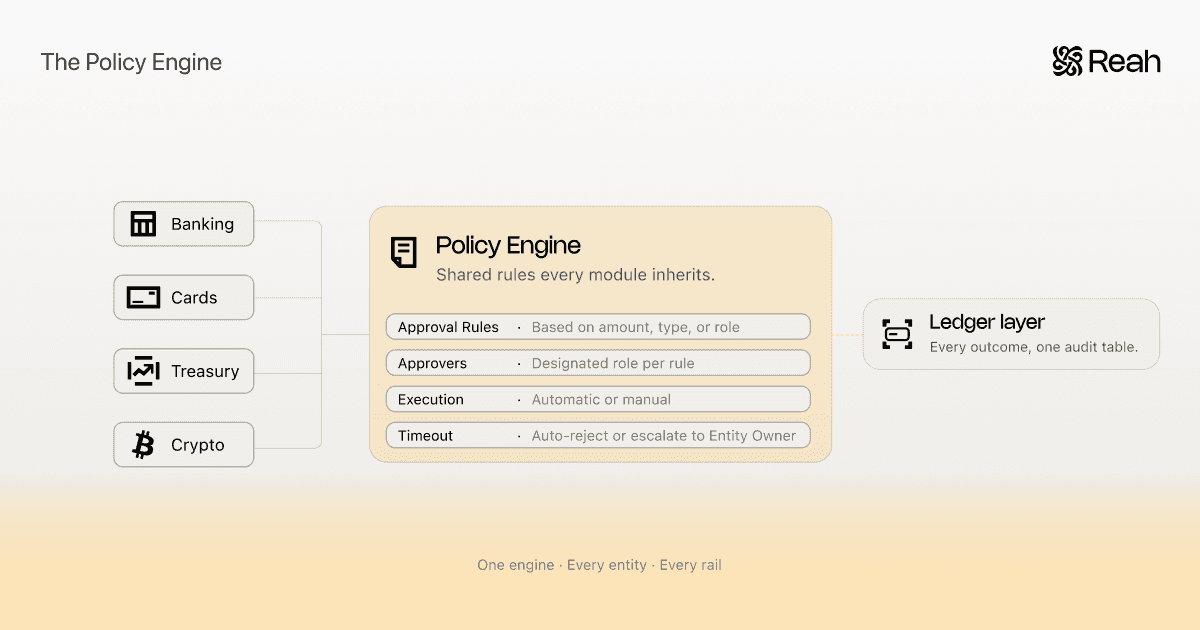
Governing a financial stack that spans multiple rails, entities, and workflows raises one question: how do you enforce consistent controls across all of it?
Most finance teams live with fragmented policy enforcement by design: card limits managed in one tool, treasury approvals routed through another, banking controls set in a third. As operations scale, the gaps between those systems become harder to manage and easier to exploit.
The Reah Policy Engine solves this because everything already runs inside one system. Set one approval threshold, and it routes consistently whether a wire is leaving your USD account, USDC is moving from your wallet, or a card is being charged at a vendor.
The result is enterprise-grade controls that scale without adding headcount, with one policy model that holds whether you're running fiat and stablecoin treasury in parallel, managing multiple entities across jurisdictions, or both.
Smart Invoicing
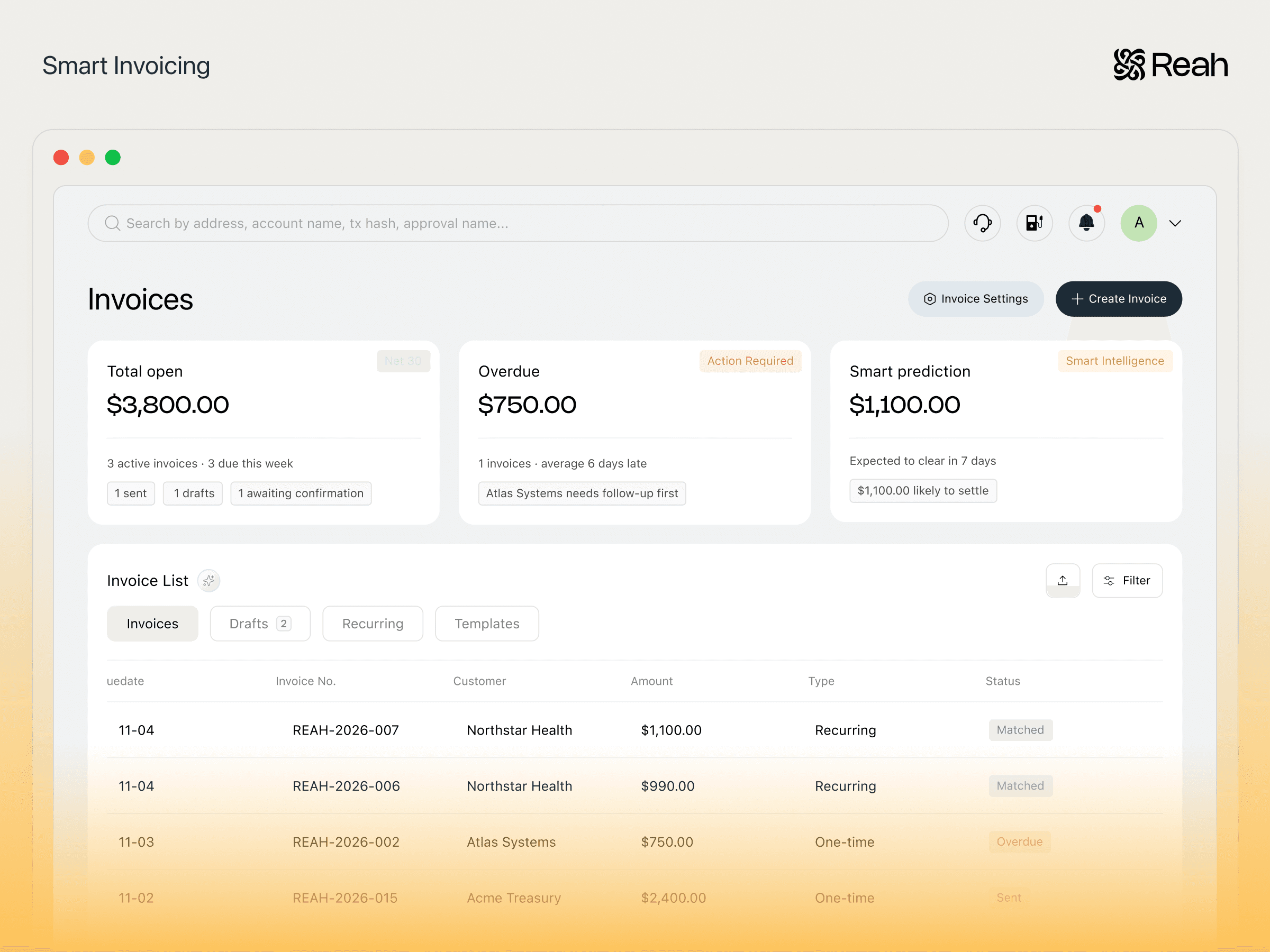
Receivables have always been the hardest part of finance to unify. Companies issue invoices in one tool, collect payments through another, and reconcile across spreadsheets, and that complexity only compounds when fiat and stablecoin rails are both in play. AR remains the piece that resists consolidation.
Smart Invoicing addresses that directly.
With Smart Invoicing, incoming payments match to open invoices automatically, across fiat and stablecoin rails, so your team spends less time chasing and more time closing. You get a forward-looking view of what cash is likely to clear, not just what's been sent. And because invoices are generated directly from your ledger data, there's no translation layer between what you billed and what you booked.
That means finance teams stop context-switching between AR tools, bank portals, and block explorers, from the moment an invoice is created to the moment it settles.
One Operating System
Each of these launches solves a real problem on its own. But the point isn't the individual products.
Fiat rails, digital assets, and AI-native execution — sharing one ledger, one policy layer, one audit trail.
That's the Financial OS. Built for the way global business finance actually works today, and for the world where AI agents move money tomorrow, governed by the same policy, recorded in the same audit trail.
Share this article


