Global Finance
Custodial vs Non-Custodial: Which Security Model Is Right for Your Business?
Reah Team

As businesses adopt digital assets, choosing a wallet is no longer just a technical decision. The custody model behind a wallet determines who controls assets, who is responsible for protecting them, and what happens if something goes wrong. While custodial and non-custodial wallets may appear similar on the surface, they take fundamentally different approaches to ownership, security, and responsibility.
It all comes down to private keys
A crypto wallet's primary function is managing private keys, the cryptographic credentials that prove ownership and authorize transactions on a blockchain. Whoever controls those keys ultimately controls the assets.
That makes private key management the defining difference between custodial and non-custodial wallets, and it determines where responsibility for security, access, and operational risk sits.
How custodial wallets work
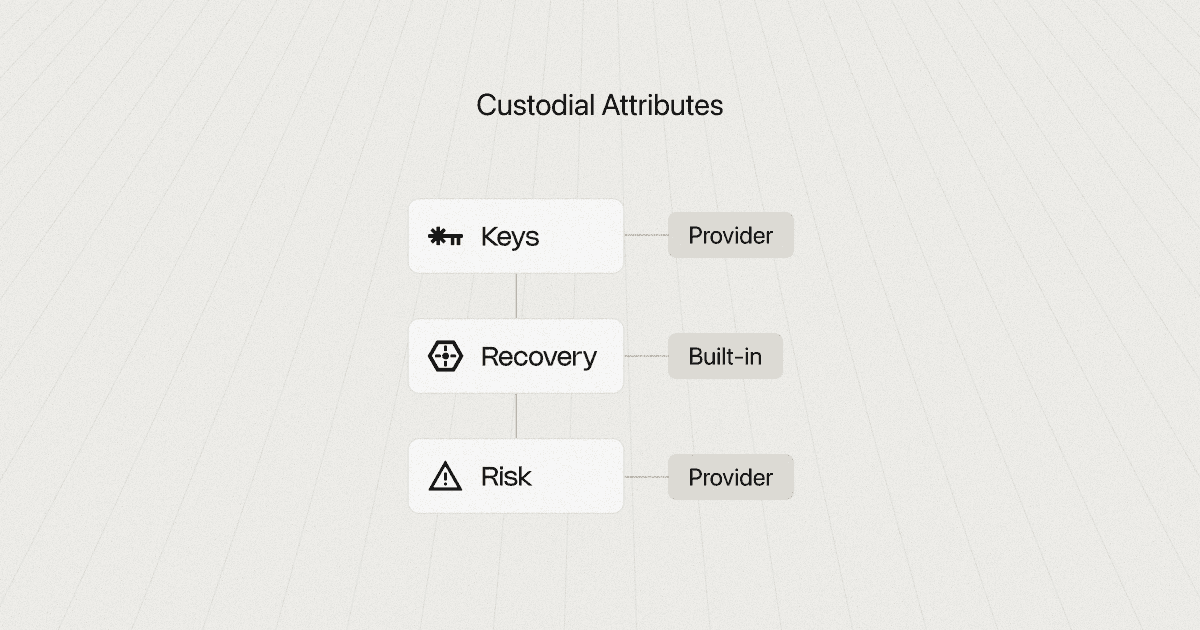
With a custodial wallet, a third-party provider manages the private keys on behalf of the business. Organizations access their assets through the platform while the provider handles key management, wallet infrastructure, and security behind the scenes.
For many businesses, this reduces the operational burden of managing digital assets internally. Account recovery, managed security, and compliance support are often built into the platform, making them a practical choice for organizations that value simplicity and support.
The trade-off is that security depends on the provider's ability to protect those assets. Because custodial platforms safeguard funds for many customers, they become attractive targets for attackers. A security incident, service disruption, or insolvency can interrupt access, making trust in the provider essential to the model.
How non-custodial wallets work
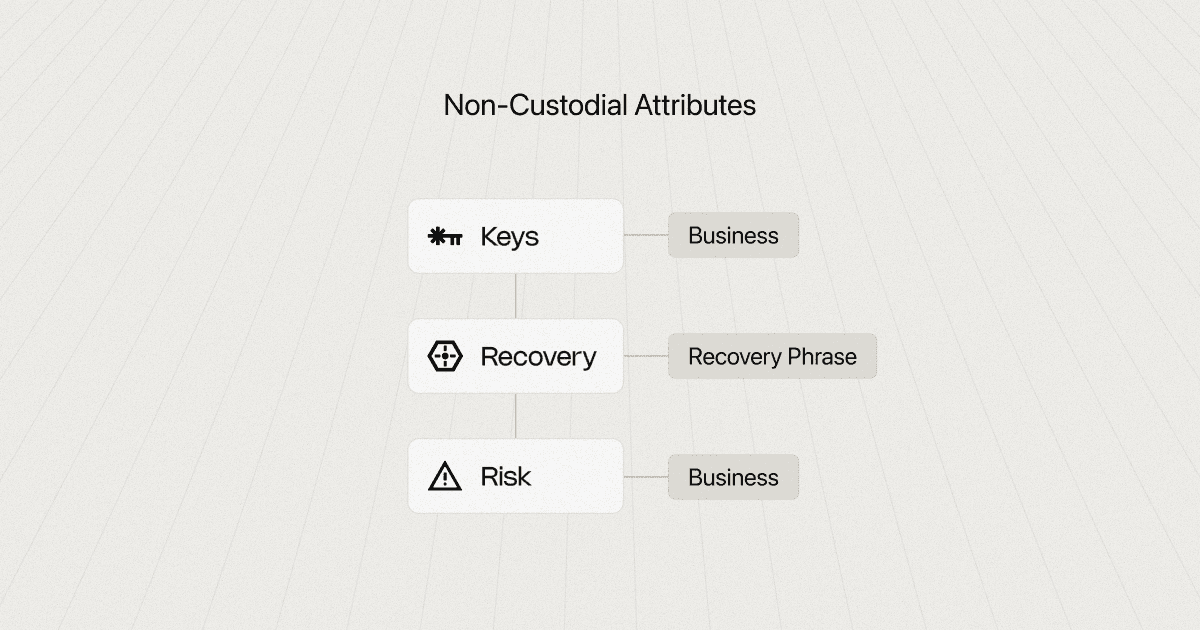
With a non-custodial wallet, the business retains direct control of its private keys. The provider supplies the software needed to interact with blockchain networks but cannot access, move, or recover assets on the organization's behalf. A recovery phrase is typically used to restore access. Losing it can mean losing access to your funds for good.
For organizations that prioritize ownership and independence, this model removes reliance on a third party to authorize transactions or maintain custody. Treasury and payment operations stay under the organization's control.
That control also brings greater responsibility. Organizations must establish their own processes for protecting keys, maintaining backups, and ensuring business continuity. Because blockchain transactions are generally irreversible, an approved malicious transaction can permanently compromise access to funds. Some providers now offer recovery mechanisms that simplify self-custody while keeping key control with the organization, though responsibility for protecting those assets ultimately remains with the business.
Choosing the right model for your business
Neither custody model is inherently better. Each simply places responsibility in a different location.
Organizations that prioritize managed infrastructure and operational simplicity may find a custodial model better suited to their needs. Those that prioritize direct ownership and greater control over digital assets may prefer a non-custodial approach.
The better question isn't which model offers more security. It's which party a business wants holding that responsibility. Understanding that distinction before choosing a wallet provider helps ensure the custody model aligns with how an organization manages assets today and as it grows.
Reah is a financial operating system for global businesses — fiat banking, stablecoin treasury, cross-border payments, and AI-native execution on one ledger. Learn more at reah.com
Share this article


